


When you work with international students every day, some choices can be surprisingly difficult to understand at first.
At SICAS, many of our observations come directly from handling applications, answering student questions and helping students plan their studies in China. Sometimes, the choices we see make us ask: Why this route?
Why would a student planning to study an English-taught degree spend a full year studying Chinese first?
Why would someone choose a more expensive Chinese language programme at a famous university when cheaper options are available?
And why do some students we work with from Francophone West Africa show such a strong interest in Guangdong?
Here are three questions that have come up repeatedly in our work.
Among the students we have worked with from the five Central Asian countries, we have encountered quite a few independent cases where students choose to spend one year studying non-degree Chinese before starting an English-taught degree.
At first, this can seem unnecessary.
If the future degree is taught in English, why not start the degree directly?
But for some students, the Chinese year appears to serve a different purpose. It is not necessarily preparation for Chinese-taught academic study. Instead, it can be a way to get used to living in China before beginning a longer and more demanding degree programme.
During a language year, students have time to become familiar with everyday life, transportation, food, campus routines and communication. They can also work towards an HSK certificate, which may be useful later depending on their university and personal plans.
For students preparing for programmes such as medicine, engineering or business, this gradual transition may also feel more manageable than arriving in China and immediately starting a full degree.
So perhaps the better question is not “Why study Chinese if the degree is in English?”
It is “What can one year in China give a student before the degree actually begins?”
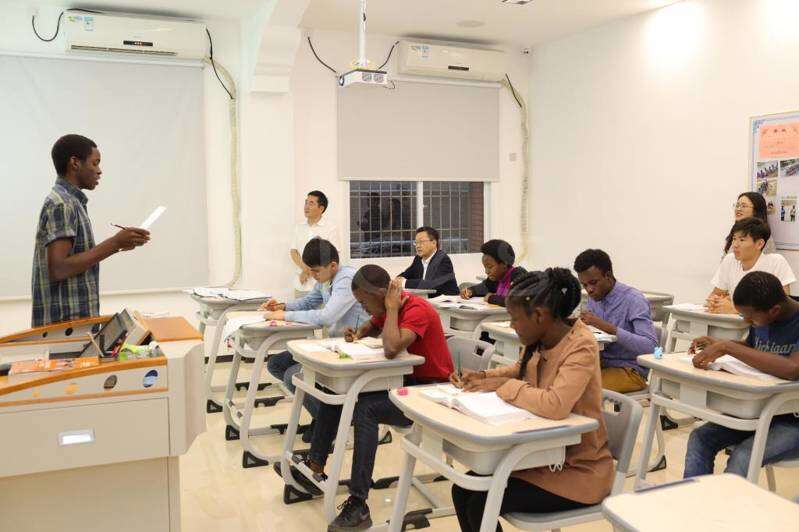
Another question we have encountered is about the university itself.
There are many Chinese language programmes in China, including options with relatively low tuition fees. Yet some students we have worked with still choose language programmes at well-known Chinese universities, even when less expensive alternatives are available.
Why?
The answer may be that they are not choosing the programme based on language lessons alone.
For some students, the university name, campus environment, city and international student community are also part of the experience they want.
A language programme at a famous university can give students an opportunity to experience the university before deciding whether they want to pursue a longer academic path in China. They can also experience a particular city and its lifestyle while studying Chinese.
In other words, the decision may be less about finding the cheapest way to learn Mandarin and more about choosing where they want to spend their first year in China.
This is especially interesting because a one-year language programme can sometimes become a kind of “trial year” for a student's future plans.
The third observation comes from another group of students we have worked with.
Among the African students we have served, we have encountered some students from Francophone West Africa who show a particularly strong interest in Guangdong.
Again, the interesting question is: why Guangdong?
For some students, the answer may be connected with what Guangdong represents in their longer-term plans.
Guangdong is one of China's major centres for manufacturing, trade, logistics and international business. Cities such as Guangzhou and Shenzhen are closely connected with global supply chains and markets in Africa.
For students who are interested in business, trade or eventually building connections between China and their home countries, studying Chinese in Guangdong can offer more than classroom language practice. Living there can also provide an opportunity to see how businesses, markets and everyday commercial life work in China.
Of course, every student's situation is different. But when we see similar choices appearing among students we have worked with, it is worth asking what they are looking for beyond the formal programme itself.
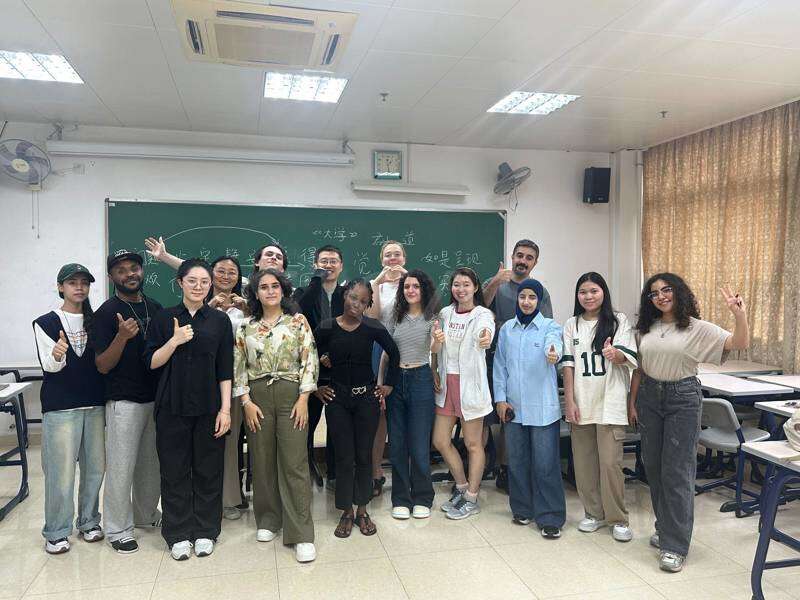
Looking at these three questions together, one thing becomes clear.
For some international students, a one-year Chinese language programme is not simply about learning Mandarin.
It can be a transition period before a degree, an opportunity to experience a university and city, or a way to become more comfortable with life and communication in China.
This may also explain why students sometimes make choices that seem unusual when looking only at tuition fees, teaching language or programme length.
At SICAS, we often see the application on paper first. But behind each application is a student making decisions about what kind of experience they want in China.
And sometimes, the most interesting part is understanding why they chose that path.
Do I Still Need Chinese If I’m Enrolled in an English-Taught MBBS Program?
English-taught medical education does not necessarily mean an English-speaking clinical environment. This article looks at why Chinese can still matter during clinical training, including some very real communication problems students may encounter in hospitals.
Read the full article
Start Your Mandarin Adventure at Lakeside Campus.
A look at the experience of studying Chinese in China, including campus life, international students and what a language programme can offer beyond the classroom.
Read the full article
Whether you are considering a Chinese language programme, a foundation year or a full degree, choosing the right starting point can make your transition to studying in China much easier.
Explore study opportunities and find a programme that fits your plans with SICAS.
SICAS (Study In China Admission System) is a platform for international students interested in studying in China. It provides information on Chinese universities, degree programmes, scholarships and admission requirements, helping students explore study opportunities across China.